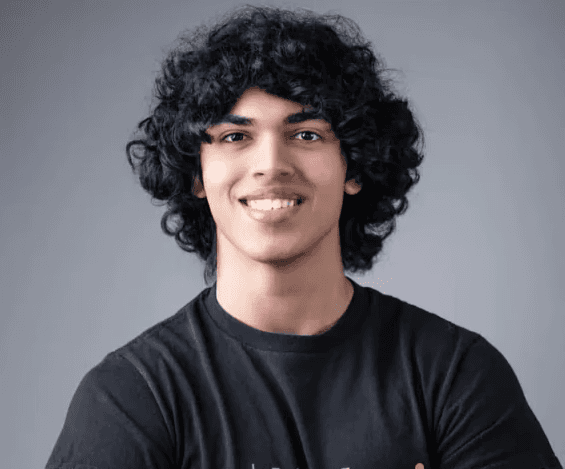
 Ishraq Khan
How Bangladesh Shaped How I Build
Before I had funding or built startups, I built with a cracked laptop and dial-up internet. Before I understood systems, I grew up inside one.
I was born in Dhaka, Bangladesh, and lived there for the first eight years of my life. We didn’t have much, and our days were shaped by limitation: power cuts, traffic, slow internet, and long lines. Everything took effort, and nothing worked unless you found a way to make it work. It wasn’t glamorous, but looking back, it was a kind of training. Without knowing it, I was learning how to build under pressure.
Scarcity Taught Me How to See Clearly
In Bangladesh, you don’t waste time on complexity for its own sake. You look for the path that gets the job done with the least resistance. That isn’t because people are lazy. It’s because the environment demands it, and I think that instinct ended up shaping how I code.
When something breaks, I look for root causes instead of elegant abstractions. When I design systems, I think about what happens when they fail, not only when they work. Before I build a feature, I ask myself whether it really needs to exist or whether it’s just noise. Scarcity taught me clarity. I learned that simplicity isn’t the absence of effort. It’s the result of constraint, discipline, and prioritization.
Constraints Made Me Creative
In Bangladesh, you find solutions not because you have every tool, but because you don’t. You improvise, you repurpose things, and you learn to use the wrong thing the right way. That mindset is still how I build today. I’ve never waited for perfect infrastructure, capital, or conditions. I start with what’s in front of me, and I move.
Kodezi didn’t start with funding or a team. It started with an idea that codebases should be able to remember, evolve, and heal themselves. I didn’t wait for the AI landscape to validate that belief. I built it while the rest of the world was still figuring out what large language models were. I think that confidence came from Bangladesh, because I never learned to wait for permission. I learned to work around the gap.
Foundation Over Flash
If there’s one thing growing up in Bangladesh taught me, it’s that resilience matters more than polish. It’s easy to build something impressive. It’s much harder to build something that lasts, something that survives instability, adapts to failure, and keeps functioning even when conditions aren’t ideal. That’s the mindset I carried into Kodezi. I didn’t just want to make a product that helps developers write faster. I wanted to build infrastructure that helps codebases survive longer.
The Perspective I’ll Never Unlearn
I’ve lived in the U.S. since 2011, and I’ve been lucky to have access to tools, people, and ideas I never had growing up. I still carry Bangladesh with me, though, not as nostalgia but as muscle memory. It shows up in the way I debug, the way I scope a product, and the way I prioritize what matters.
I didn’t learn to build inside abundance. I learned to build inside limits, and that’s why I still believe that if you can build inside a constraint, you can build through anything.